


FIFA’s Astonishing Greed


The 2026 World Cup is well underway, and typically when the football starts, the off-pitch controversy stops. And this is a World Cup that has not been without its share of contentious issues. We have had officials interrogating a referee for 11 hours before denying him entry into the USA. FIFA has revoked Iran’s ticket allocation. One of the Ghanaian players was denied entry to Canada.
But the biggest question marks have been around the seemingly endless greed of FIFA. Getting into America has proved far too much for a range of players, fans and officials. However, the supporters who have made it past immigration require incredibly deep pockets if they are to actually make it to a game.
Huge Profits for Not-For-Profit Organisation
Technically speaking, FIFA is a not-for-profit organisation. It is quite possibly the most profitable such institution in the world. Its “revenue budget”, as FIFA refers to its projected income, is $14bn for the period between 2027 and 2030. In theory at least, they plough all the money they make back into the great sport we all love.
FIFA spends the income generated from the World Cup and other sources to grow and improve the game. According to a letter that FIFA’s director of media, Bryan Swanson, wrote to The Guardian newspaper, the world governing body uses such money to “fuel the growth of football”. Moreover, they are committed to “ensuring fair access to our game for (fans)”.
They also, however, spend money on rather generous pay packets for their top staff. President Gianni Infantino, whose name we can roughly translate as “John Little Baby”, takes home around $6m a year. FIFA also offers other members of senior management very handsome remuneration. For example, Secretary General Mattias Grafstrom takes home over $2m.
Empty Rooms, Empty Promises
Another controversy before the tournament kicked off concerned the number of empty hotel rooms reported in major North American cities. This was partly due to the FIFA block bookings for their various officials, which were subsequently released. The American Hotel & Lodging Association (AHLA) produced a report revealing that in virtually all the host cities, bookings were significantly below expectations.
One obvious reason for this was that FIFA created a huge demand, forcing up costs for normal fans. However, they then cancelled up to 70% of the rooms in major cities such as Boston, Dallas and LA, according to the AHLA. And of course, many of these rooms were in very nice hotels… only the best for FIFA.
All in all, we believe that FIFA really does do very well out of its “not-for-profit” status. And its top brass, who take home seven-figure salaries, stay in five-star hotels, and “earn” generous daily allowances, do best of all.
FIFA Takes the Money but…
One great anecdote to come out of this World Cup sums up FIFA’s hubris, ignorance and greed perfectly. According to reports from respected news outlets, including The New York Times, FIFA explained that, essentially, they would take all the money from ticketing, broadcast rights, sponsorship and so on.
However, host cities, such as LA, would have to pay for policing, security and transportation. CEO of the Los Angeles Sports & Entertainment Commission, Kathryn Schloessman, asked what LA would get out of the deal. With no trace of irony, the FIFA representative replied that the World Cup would help put LA on the map!
Tickets Price Out Ordinary Fans
Prices for just about everything connected to the 2026 World Cup have been hiked to genuinely insane levels. Hotel rooms that cost around $90 in 2025 were over $500 for 2026 games in Guadalajara. Vancouver has some of the highest average prices. There, rooms will set you back approximately $890 in general and more like $1,500 on peak nights.
Transport has also seen insane price increases. This World Cup automatically entails huge travel costs for many fans, being split over three vast nations. However, even when you are at your destination city, the expense is far from over. The US bid promised free public transport to games for ticket holders. This was something offered at each of the last two World Cups.
Soon after, however, this changed. Shortly before the tournament began, the price of certain trains and shuttle buses that typically cost £10 to £20 increased to £60 to £120 for the World Cup. Fan fury has led to those ridiculous increases being reduced, although they remain well above their true cost and even further above the “free” that formed part of the hosting agreement.
Perhaps the most controversial area of all, however, is ticketing. US sport is commercialised in a way unseen anywhere else on the planet. It seems FIFA were determined not to miss out. Consequently, many of the typical protocols and practices that have dictated ticket prices at past tournaments were discarded. Instead, there was one goal: make as much money as possible.
Confusion Abounds
When Oasis used dynamic pricing for their comeback tour in 2024, there was widespread anger. However, FIFA’s approach makes that look like a free gig. Generally speaking, FIFA make prices and ticketing processes public well in advance of the World Cup. For 2026, pretty much everything about getting a ticket has been as opaque as possible.
FIFA refuses to disclose ticket availability, category numbers, sale dates, or purchasing procedures.
Instead, fans only knew one certainty: tickets would cost a fortune. FIFA calls its system “variable pricing,” aligning rates with the North American market. In an arena where the cheapest Super Bowl tickets command between $4,000 and $6,000, FIFA deemed these eye-watering prices entirely appropriate.
Unfortunately, it has meant that in many ways this has become a football tournament by the rich, for the rich. Many normal fans simply cannot afford to attend. Those who feel they simply can’t miss out have made huge sacrifices, with one England “super fan” even selling his house. Others will surely amass huge debts following their nation, with FIFA feathering their golden nest.
Resale Frenzy
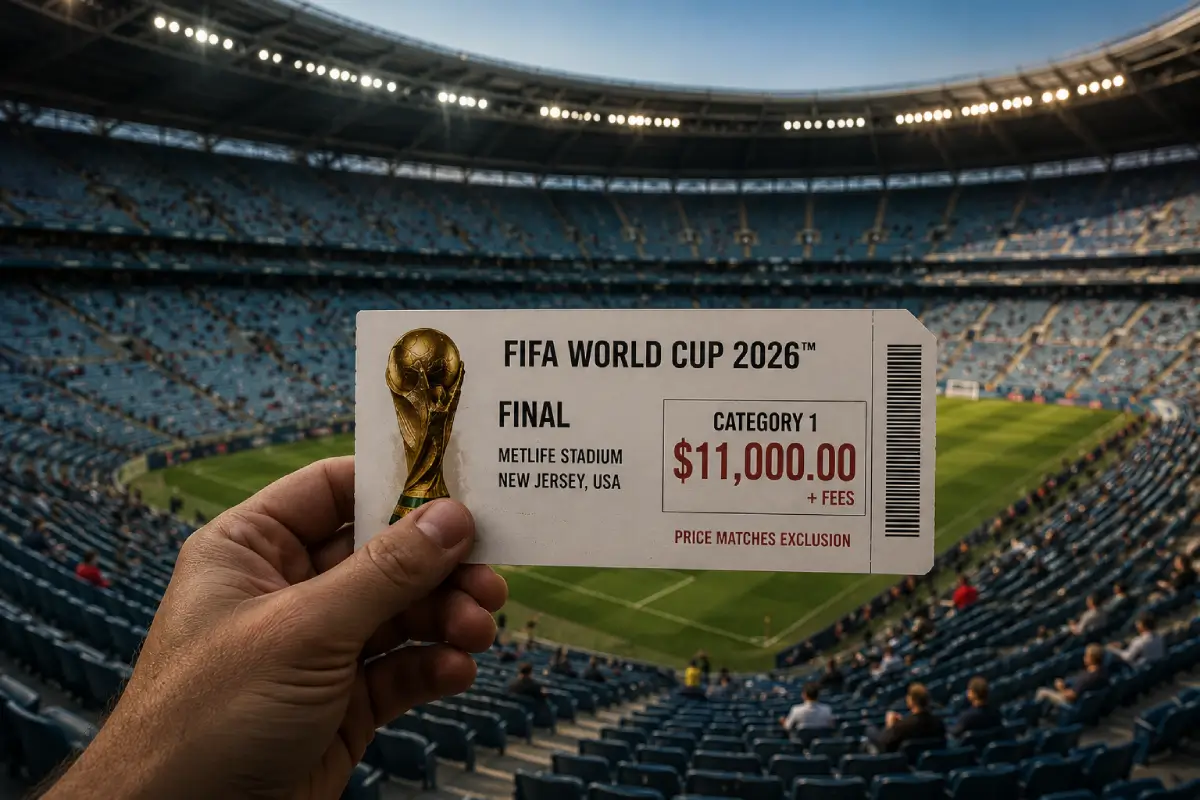
New York media reported that category one tickets for the final had reached almost $11,000 just before the tournament began. For the opening clash between Mexico and South Africa, $3,000 was the going rate.
However, at the time of writing, there are lots of tickets for just about all games on various resale sites. And prices are off the charts. The cheapest tickets on one site for the final were over $8,000. However, category one tickets were all over $20,000. And certain premium packages had prices ranging from $33,000 right up to $288,230 in the FIFA Pavilion!
The use, both official and unofficial, of resale websites has been another huge area of controversy. The US resale market resembles the Wild West because the government barely regulates it. For the first time, FIFA has its own resale platform, and there is no upper limit to prices. FIFA takes a 15% commission from both the buyer and the seller. Therefore, the more tickets fetch, the more cash they make.
But Still Empty Seats
We do not know whether or not anyone will pay some of the sillier prices resale websites are quoting. However, what we do know is that we have seen lots of tickets becoming available in the days and even hours before kick-off. FIFA claims the World Cup is a sell-out. And yet tickets are available on the official FIFA site and elsewhere for less than face value.
Demand for games like The Final will obviously outstrip supply. The same is true for matches featuring the host nations, as well as other heavyweights. But this 48-nation event is going to throw up a lot of less appealing games. FIFA remains determined to eke out every single dollar from these games. Consequently, football’s governing body has sold some tickets at exorbitant prices, while relying on resale sites to dump the remaining inventory for whatever price they can get.
Ultimately, fans lose out. This happens all too often. While FIFA might cap around 1,000 “supporters” tickets at $60 for each match, the vast majority of seats will command five, 10, and even 20 times that amount. The richest not-for-profit on earth stands to grow even richer in the world’s capitalist mecca.
No comments added yet. Be the first!