


When Argentina Ran Out of Ideas: Spain’s Tactical Masterclass Won the World Cup


Spain started their World Cup campaign with a shock 0-0 draw against minnows Cape Verde. At that point, hasty fans and pundits suggested another poor World Cup was on the cards for Spain. After all, they had been knocked out of the 2018 and 2022 tournaments at the Round of 16 stage and didn’t progress past the group stage in Brazil in 2014. Such predictions, of course, proved far off the mark. Spain subsequently dominated the tournament in North America and became world champions for the second time.
Spain beat Argentina 1-0 after extra time in the final on 19th July, but that doesn’t tell the whole story. From a statistical perspective, it was one of the most one-sided matches you’re likely to see. The match was highly disappointing as a spectacle, partly because Argentina did everything they could to disrupt the game’s flow. Lionel Scaloni’s side were aiming to retain the World Cup after beating France on penalties in Qatar in 2022. That match had finished 3-3 after extra time, but Argentina never looked like scoring one goal in the 2026 final, let alone three. Indeed, they had an xG of 0.0 until the second period of extra time!
Calm Heads and Pristine Passing Helped Spain Prevail
Spain, for their part, controlled the game with 65.1% possession, producing 20 shots with 12 on target. Argentina didn’t muster a single shot on target in the whole 120+ minutes of football. On the plus side for the South Americans, their goalkeeper Emiliano Martínez set a new record for the most saves in a World Cup final (10 in normal time, 11 including extra time). Were it not for the Villa stopper’s heroics, Spain would have won with relative ease.
From an Argentine perspective, the game was set up for Lionel Messi to cement his status as the GOAT. Playing in his third World Cup final, Messi was starved of opportunities as his team lacked attacking ideas or intent. The Argentina players also spent far too much time fouling their opponents. This eventually resulted in the dismissal of Enzo Fernández for a second bookable offence. Although that occurred in injury time with the game at 0-0, the red card effectively extinguished Argentine hopes of an unlikely victory.
Despite facing regular provocation, the Spanish players kept calm and let their football do the talking. The likes of Lamine Yamal, Dani Olmo and Rodri were repeatedly upended by robust Argentine tackles. But they picked themselves up and simply continued to outplay their tempestuous opponents. Their reward eventually came in the 106th minute. Luis de la Fuente’s attack-minded substitutes combined brilliantly as Nico Williams headed the ball back to Ferran Torres, who hammered home. Torres became just the second substitute to score the winning goal in a World Cup final (after Mario Götze scored for Germany in 2014, also against Argentina).
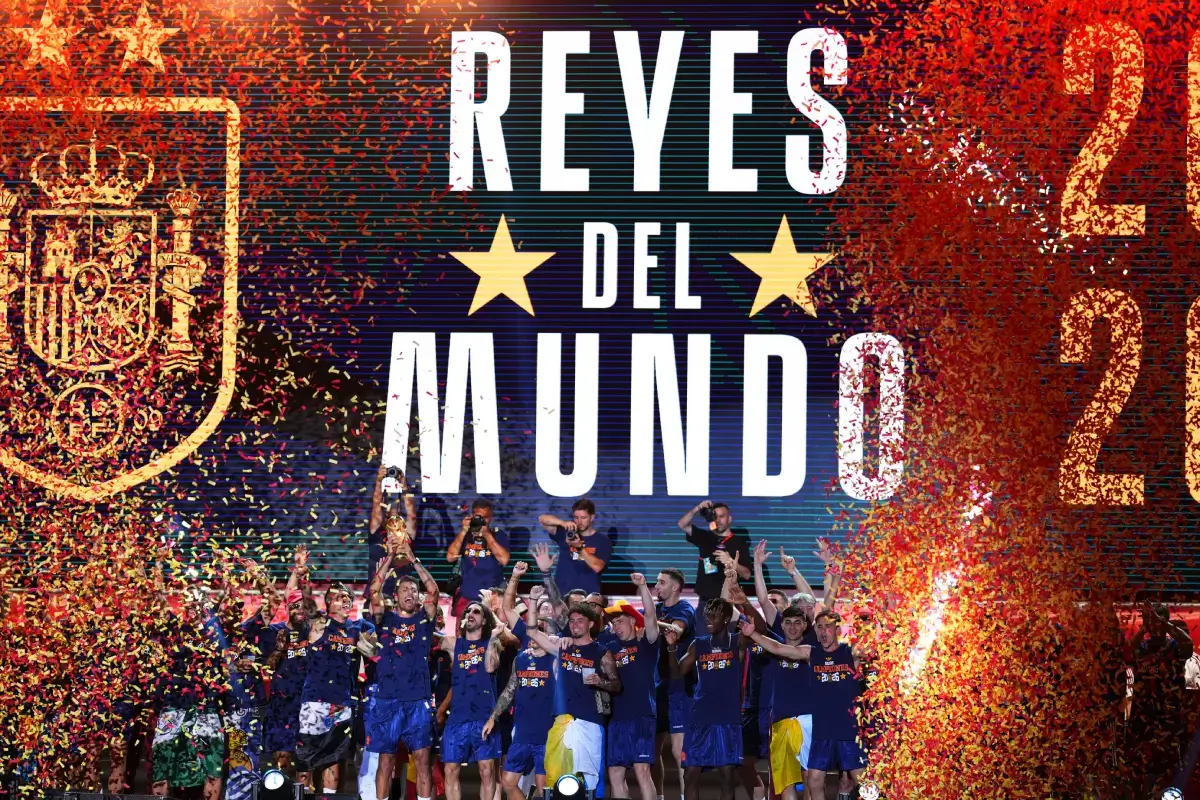
Spain Win Almost Everything
Ahead of the game, much was made of it representing the passing of the baton from one footballing great to another. The photos of Messi as a young man meeting Lamine Yamal as a baby made this understandable. Yamal had a decent game, without really taking it by storm. As it turned out, a different 19-year-old put in arguably the performance of the final: Pau Cubarsí.
The young Barcelona defender was simply outstanding. Despite playing at centre-back, he had the most touches (139), the best passing accuracy (96%), and made the most successful passes (121), line-breaking passes (21) and clearances (6) of any player in the final. That capped off an excellent tournament, and Cubarsí deservedly won the FIFA Young Player Award for the tournament.
Cubarsí played a big part in Spain conceding just one solitary goal over the course of the World Cup. As did Spain’s man between the sticks, Unai Simón. He won FIFA’s Golden Glove as the best goalkeeper of the World Cup. His total of seven clean sheets in eight games is the most by any keeper at a single World Cup.
Rodri Back to His Best?
Another Spain player who has been recognised by FIFA is Rodri. The Manchester City man has rediscovered some of his best form for this World Cup. In the final, he was only narrowly behind Cubarsí in terms of passing accuracy (95.3%). He also wasn’t far behind on the total number of passes (106). Since they began counting such things in 1966, only one other player has made more than 100 passes in a World Cup final (Dunga, playing for Brazil in 1994 against Italy, with 130 passes). Rodri won the Golden Ball as the player of the tournament. He joins past winners including Zinedine Zidane, Ronaldo, Diego Maradona, and a certain Lionel Messi.
One individual award won by a non-Spanish player was the Golden Boot. France’s Kylian Mbappé won that for the second World Cup running, this time with 10 goals. Lionel Messi again had to settle for the runners-up spot.
Unfancied Luis de la Fuente Proves His Worth Again
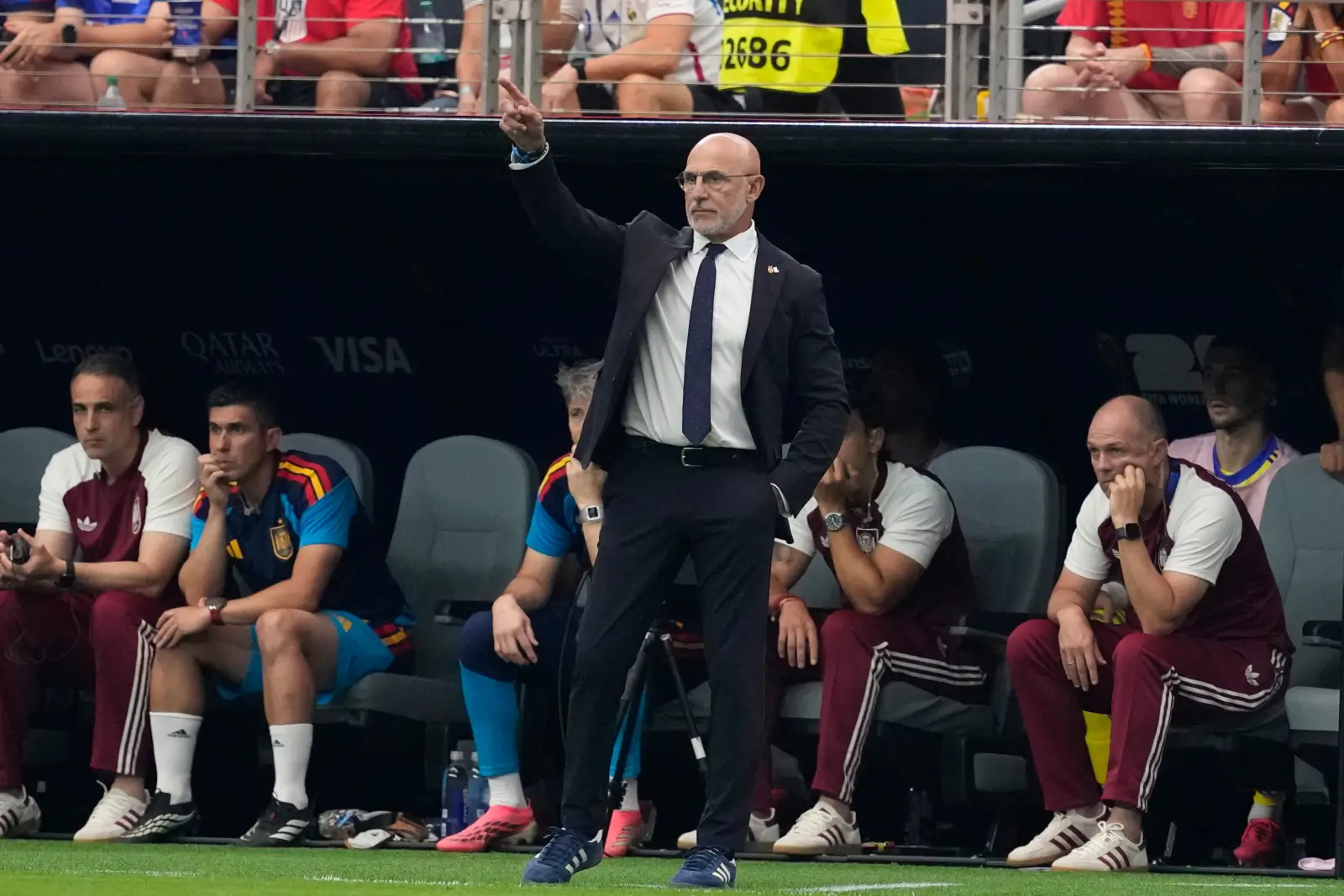
Luis de la Fuente took on coaching duties for Spain in 2022 after a disappointing Qatar World Cup. It’s fair to say that hopes were not high. Fast forward to now, and he has surpassed all expectations. He’s led his nation to glory in the Nations League (2022/23), the European Championship (2024), and now the World Cup. With an 85.7% win rate, he’s already arguably Spain’s greatest coach ever. Vicente del Bosque led Spain to victory in the World Cup (2010) and the Euros (2012). However, if Luis de la Fuente lands one more tournament triumph, he will be the undisputed GOAT.
What’s Next for World and European Champions Spain?
It is striking that 11 of the 26 players in Spain’s World Cup squad are aged 25 or younger. On the opening day of the tournament, the average age of Spain’s players was 26 years and 273 days. Only five sides had a lower average age: Ivory Coast, Ecuador, Morocco, Bosnia and Herzegovina, and Tunisia. The likes of Lamine Yamal, Nico Williams, Gavi, and Pedri are only going to get better over the coming years. That is ominous for every other top footballing nation who have been left playing catch-up at the World Cup.
Once the dust has settled on the World Cup, eyes will inevitably turn towards Euro 2028. Before that, however, comes the Nations League. Spain’s Nations League group includes the sides that finished third in the last two World Cups: England and Croatia. Their next match is a very tasty-looking encounter against England at Wembley. This will prove an interesting yardstick for both sides. With so many exceptional young players among their ranks, balanced with their experienced stars, Spain will keep improving. Spain have now gone 38 matches unbeaten in all competitions. If they continue that run, the other nations will be getting increasingly desperate to find a way to compete. We wish them luck!
No comments added yet. Be the first!